|
|
|
|
|
|
|
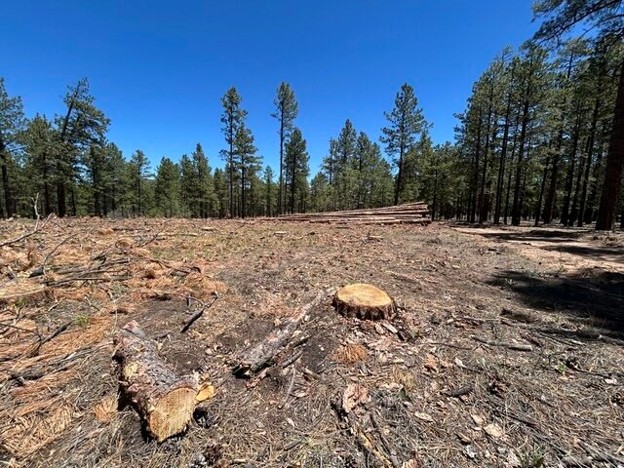
Encino VIsta Project Area, east of Drill Hole Spring — Photo: Sam Hitt
|
|
|
We are taking action for our forests!
|
|
I really hope all of you are well. I had to take an unplanned sabbatical due to a major life transition and some physical injuries. It’s been a rough year. During this time, however, I never stopped wanting to advocate for the Santa Fe National Forest and for all forests. Now, The Forest Advocate is coming back online.
|
It’s a difficult time for forest advocacy. Environmental regulations that formerly helped us protect forests are being steadily dismantled, and we are left trying to work with whatever protections still remain. It’s becoming more necessary for projects to be challenged through the legal system. Conservation organizations are increasingly struggling for funding, and concerned members of the public are often overwhelmed by a multitude of serious political and environmental issues. But giving up is not an option. Our forests are life and sustain life, and it’s critical to assist them in surviving and thriving.
|
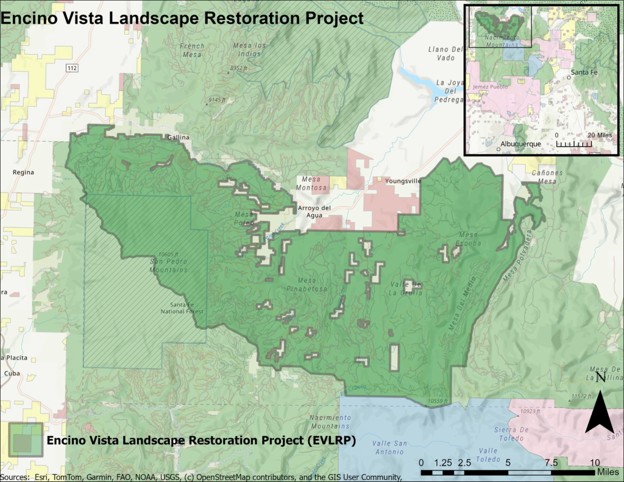
Three conservation organizations, WildEarth Guardians, the Santa Fe Forest Coalition, and The Forest Advocate have filed a Notice of Intent to Sue concerning the 200-square-mile Encino Vista Landscape Restoration Project in the Jemez Mountains of the Santa Fe National Forest (SFNF), and the Revised SFNF Forest Plan. Our press release is provided below. In addition to 26,700 acres of thinning and 74,700 acres of burning, the Forest Service plans to commercially log over 7,200 acres of forest — including clearcut logging.
|
The 2022 Forest Plan Revision increased allowable commercial logging by 150% over the previous Forest Plan allowance. Commercial logging is highly damaging to dry forests, and it’s unknown whether the logged areas will ever fully recover. Something will grow there, but logged areas tend to remain highly disturbed and out of balance, especially as the climate becomes hotter and drier. Almost all tree cutting requires subsequent burning, which introduces increased fire risk to dry forests. The Forest Service claims that the planned logging will help to reduce fire risk and improve forest health, yet past history indicates that it’s likely to do the opposite. This project requires comprehensive analysis, and such analysis has not yet been done.
|
Recently, there have been multiple fires burning on the SFNF – mostly lightning-strike fires, although the cause of one fire, the McCauley Springs Fire, remains undetermined. Some logging proponents are claiming that these fires illustrate why logging, thinning, and burning our forests in projects such as the Encino Vista Project is needed. Yet, according to the June 26 NMFire update, logging debris (slash) was one of the primary fuels that spread the McCauley Springs Fire. The calamitous 2022 SFNF Calf Canyon Fire was also partially fueled by thinning slash, along with the drying effects of having removed too much tree overstory. The relationship between forest fuels reduction treatments and wildfire behavior is far more complex than simplistic claims suggest.
|
We are currently having an intermittent rain pattern, and the recent SFNF fires are relatively small. The Forest Service is not substantially expanding fires with incendiary devices for “resource benefit,” as they have done in the past. These wildfires may actually be an example of a relatively intact and natural fire regime taking place, and one that will most likely genuinely benefit the landscape.
|
The next forest update will be an article concerning our broader conservation interests in the challenge to the Encino Vista Project. This fuels reduction and logging project is one among many across the West as the Trump administration expands intervention and extraction from our forests. By challenging this project, we have an opportunity to address the prevailing forest management paradigm that is not supporting resilient and ecologically functional forests, nor adequately protecting communities. Within the context of the Encino Vista Project challenge, we will be addressing issues such as the need to:
|
- Comprehensively analyze forest fuels reduction projects, using a cost/benefit analysis framework
- Consider the full and holistic ecological picture when planning forest treatments
- Develop forest management strategies that increase moisture in ecosystems instead of drying them out by removing too much overstory and other vegetation
- Protect endangered and sensitive wildlife species, and conserve all native species
- Rethink and update the prevailing approach to wildfire management
- More seriously consider health impacts to communities from prescribed-fire smoke
- Genuinely involve conservation scientists and the public in project development and analysis
- Respect forests and support their right to exist and thrive.
|
|
Conservation Groups Move to Stop Destructive Logging on the Santa Fe National Forest
|
|
The Encino Vista project authorized over 7,200 acres of commercial logging
|
|
|
|
|
|
Chris Smith, WildEarth Guardians, csmith@wildearthguardians.org
|
|
Sam Hitt, Santa Fe Forest Coalition, sam@wildwatershed.org
|
|
Sarah Hyden, The Forest Advocate, sarah@theforestadvocate.org
|
|
|
|
|
SANTA FE, N.M. – WildEarth Guardians, the Santa Fe Forest Coalition, and the Forest Advocate today filed a notice of intent to sue the Forest Service over Endangered Species Act violations related to increases in logging approved under the Encino Vista Landscape Restoration Project and the Revised Forest Plan.
|
When the Forest Service finalized its 2022 Revised Forest Plan, it approved a 150% increase in commercial logging over the previous 1986 plan, including in areas identified as not suitable for timber production. Toward this end, the Encino Vista project authorized over 7,200 acres of commercial logging, including clearcutting in ponderosa pine forests and aggressively thinning habitat for the Mexican spotted owl and Jemez Mountains salamander. But despite the scope of the project, and its harmful effects on these imperiled species, the Forest Service didn’t fully analyze its environmental impacts, or even reveal the specifics of its logging plans.
|
“Logging the last big trees and building more roads wouldn’t protect communities from wildfire, stabilize the climate or benefit wildlife,” said Sam Hitt, President of the Santa Fe Forest Coalition. “It only helps Trump fulfill his promise to the timber industry of turning national forests into tree farms.”
|
The Forest Service further violated the Endangered Species Act by not formally consulting with the U.S. Fish and Wildlife Service regarding the effects the project would have on the Mexican spotted owl. Logging large trees, up to 24 inches across, would be particularly damaging to the owl’s habitat. The agency also dismissed expert research showing that both Mexican spotted owls and Jemez mountain salamanders require more tree cover than what will remain after all the logging and burning. The project also threatens numerous sensitive species, including Northern goshawk and Pinyon jays.
|
“The agency never really explained when, where, or how it plans to log this area, or how that will impact spotted owls and salamanders,” said Erin Hogan-Freemole, staff attorney with WildEarth Guardians. “Instead, the Forest Service wrote itself a blank check covering thousands of acres for years to come. That violates the Endangered Species Act.”
|
The Forest Service cites reducing wildfire risks and potential threats to nearby communities to justify logging and repeated burning across such a vast landscape. Yet, less than 4% of the project falls within the Wildland Urban Interface, and all the commercial logging will take place miles away in the backcountry.
|
“During the last quarter century (2000-2024), land management agency intentional burns ignited the majority of acres burned by wildfire in and from the Santa Fe National Forest,” stated Sarah Hyden, Director of The Forest Advocate. “Although the Forest Service plans widespread logging to reduce fire risk, it has failed to meaningfully acknowledge and evaluate the fire risk created by burning the large amounts of logging debris (slash) produced by this project.”
|
|
“Logging and burning the forest is not going to protect people from wildfire, and resources should be focused on creating defensible space around homes where structure fires actually start,” said Chris Smith, wildlife and wild places program director with WildEarth Guardians. “Logging will not prevent wildfires or keep homes from burning, but it will harm crucial fish and wildlife habitat.”
|
|
|
|
|
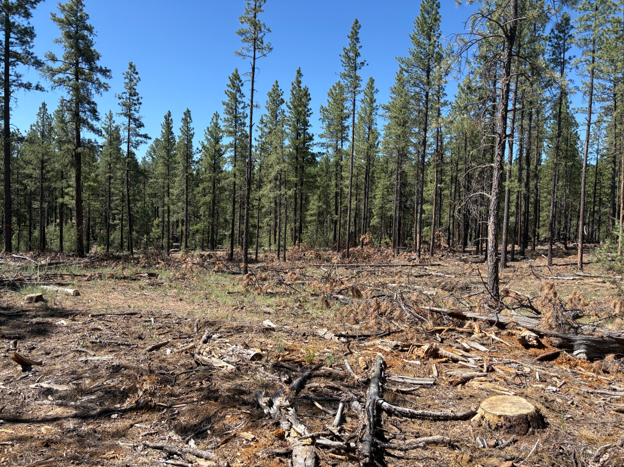
Slash from prior logging in the Encino Vista Project area, Ojo Restoration — Photo: Jonathan Glass
|
|
|
|
|
|
|
|